It is 5:10AM and we are up. Well, I am up and Nathan seems to still be slumbering. So I'll start getting my stuff ready and eating loudly soon to be sure he isn't tardy for the 6:00 departure bell.
Rain in the forecast, probably unavoidable even with the early start. I'll miss my "B" bike with great clip on fenders, disc brakes (that don't get mushy and significantly less effective in the rain) and the big tires.
But we've all got fancy rain gear galore so we won't get cold. We swallow some grit from the riders in front of us, we might have to brake a little sooner and go a little slower. We might not have quite as much fun as we've been having these last few days.
But considering at least one of the big reasons why we're doing this, it sort of seems fair.
Tuesday, June 25, 2019


Sunday, June 23, 2019
Bike Church on the Lobster Roll
Today is Sunday and I didn't go to church because I was riding my bicycle. This is not something that happens often but when it does, it is called "bike church," a term I learned from Nathan years ago. And it actually made sense to me when I thought about it because I was so struck by my friend Jimmy saying to me when I was in college that "running is a form of prayer."
So that was a long way of telling you that I am going to bring up another Mormon thing today because I think it is apt because it is Sunday and all that. There's a guy named Lehi in the Book of Mormon who supposedly told his son Jacob that "there must needs be opposition in all things." This is not a concept unique to Lehi, it runs through all sorts of religions, but basically without good, you can't have bad. Without bran flakes, fruity pebbles lose their appeal. Without some of us being afraid of going downhill fast on our bikes, you couldn't have other people who love it so much. (maybe that last one doesn't quite work but you get the idea)
So today is a series of stories about opposites.
At one point (sorry Dr.) I was feeling peeved at Nathan. I don't like knowing exactly how far there is to go (except in race situations when I really, really want to know). I especially don't like it when I am not feeling great or the task is unpleasant. When I worked at Red Lobster and Macaroni Grill in high school, I would try to avoid looking at my watch or the clock because I felt like not knowing made the time go by faster. The whole watched pot thing.
But then, not too long after telling us that we were 1/3 of the way done with the ride and 1/4 of the way done with the climbing (I think) Nathan pulled us on a long, gradual descent with some tailwind at about 73mph for at least an hour. And then when we passed a "ride and fly" festival, there was a finish line and Nathan posted up like Edvald Boasson-Hagen and it was tremendous and I loved him for it and forgave him for being helpful and me being annoyed at him being helpful.


So that was a long way of telling you that I am going to bring up another Mormon thing today because I think it is apt because it is Sunday and all that. There's a guy named Lehi in the Book of Mormon who supposedly told his son Jacob that "there must needs be opposition in all things." This is not a concept unique to Lehi, it runs through all sorts of religions, but basically without good, you can't have bad. Without bran flakes, fruity pebbles lose their appeal. Without some of us being afraid of going downhill fast on our bikes, you couldn't have other people who love it so much. (maybe that last one doesn't quite work but you get the idea)
So today is a series of stories about opposites.
At one point (sorry Dr.) I was feeling peeved at Nathan. I don't like knowing exactly how far there is to go (except in race situations when I really, really want to know). I especially don't like it when I am not feeling great or the task is unpleasant. When I worked at Red Lobster and Macaroni Grill in high school, I would try to avoid looking at my watch or the clock because I felt like not knowing made the time go by faster. The whole watched pot thing.
But then, not too long after telling us that we were 1/3 of the way done with the ride and 1/4 of the way done with the climbing (I think) Nathan pulled us on a long, gradual descent with some tailwind at about 73mph for at least an hour. And then when we passed a "ride and fly" festival, there was a finish line and Nathan posted up like Edvald Boasson-Hagen and it was tremendous and I loved him for it and forgave him for being helpful and me being annoyed at him being helpful.

(Actually a re-enactment of the original post-up that he did when we rolled onto the gravel descent but also a preview of the later post-up at the airshow.)
Today had more climbing than yesterday, or the day before, more climbing than tomorrow, just more. And that was worrisome. I felt like yesterday went pretty well and then I was afraid that today would be something of a disaster for me. I know part of this is me sand-bagging but I've had some rough days on long rides the day after long rides so it wasn't just that...
Anyway, I was nervous. And stuff didn't always feel great, my feet hurt, I couldn't find a comfortable position for my hands all day, my drinks weren't always cold (seriously once I complain about one thing, the absurdity of complaining at all about this whole endeavor is readily apparent but bear with me please), and there were moments like when we started out flying after lunch and I was doing 400 watts to try and catch back on behind flying Brian Howles that I struggled.
But then we went up the last big climb of the day and I managed to stay pretty close to the smooth, ridiculously relaxed (and fast) climbing Brian. And it felt good to dig deep a little bit and feel like there was still power down in there. There is an immense satisfaction that comes when you ask your body for something and it responds, particularly because you know you've worked hard to make it capable of doing such things.
Which is part of the paradox of this whole trip that is so fascinating. Because asking your body to do something, especially something like going up a climb chasing Brian Howles towards the end of day 3 of 100+ miles a day of riding and having it actually do it is the exact opposite of being sick, of having your body betray you, whether it is cancer or any other kind of illness.
We are doing this physically challenging thing and in doing so trying to help provide mental health care for people dealing with that horrific betrayal where instead of doing what you ask it to, your body is destroying itself.
So it makes sense.

Because when you roll into town and find the Howles clan holding up signs and cheering you on and telling you that it matters, it makes today into the opposite of the terrible, horrible, no-good, very bad day.
Saturday, June 22, 2019
Lobster Roll Days One and Two
Nathan said he was going to blog about the ride. I've been neglecting this bad boy for quite some time so I figured why not fire it up. But then I have had absolutely zero cool things to say. And yesterday, when we got to the end of the ride at 6:30, I couldn't come up with a single thing. So here's the second attempt.
I only drank two Mt. Dews today. And only 12oz each at that. I'm just thinking that if I go to that well too many times too early, it won't have the same restorative effect on day 5 and 6 when I really need it. Right?
You would think that after 105 miles yesterday the part of me that would hurt the most would be my legs. But honestly, it was my hands and the bits I sit on. Vague discomfort, then really annoying, then feeling overwhelmed by the desire to not be sitting on my bike pedaling.
Of course, if I give in to that, I miss this:

And there were plenty of times today thanks to some very smooth roads and some nice tailwinds where you get to just cruise along in line at 20-25mph. There is something immensely satisfying about working in a pace line and perhaps even more so when they are your friends and you are working on something that is so much fun and will end up helping people facing something much less pleasant. Something terrifying and soul crushing.
Plus one of my favorite songs and one that I even had ambitions of learning to play on the piano ages ago is Ashokan Farewell, composed by Jay Ungar not far the reservoir at a camp where he ran a festival for years.
He said he wrote the tune as a way of trying to deal with the feeling of loss that overwhelmed him when he had to return to regular life and say goodbye to the special people that he played and sang and lived with at the camp.
I only drank two Mt. Dews today. And only 12oz each at that. I'm just thinking that if I go to that well too many times too early, it won't have the same restorative effect on day 5 and 6 when I really need it. Right?
You would think that after 105 miles yesterday the part of me that would hurt the most would be my legs. But honestly, it was my hands and the bits I sit on. Vague discomfort, then really annoying, then feeling overwhelmed by the desire to not be sitting on my bike pedaling.
Of course, if I give in to that, I miss this:

And there were plenty of times today thanks to some very smooth roads and some nice tailwinds where you get to just cruise along in line at 20-25mph. There is something immensely satisfying about working in a pace line and perhaps even more so when they are your friends and you are working on something that is so much fun and will end up helping people facing something much less pleasant. Something terrifying and soul crushing.
Plus one of my favorite songs and one that I even had ambitions of learning to play on the piano ages ago is Ashokan Farewell, composed by Jay Ungar not far the reservoir at a camp where he ran a festival for years.
He said he wrote the tune as a way of trying to deal with the feeling of loss that overwhelmed him when he had to return to regular life and say goodbye to the special people that he played and sang and lived with at the camp.
He wrote that by the time "the tune took form, I was in tears. I kept it to myself for many months unable to fully understand the emotions that welled up whenever I played it. I had no idea that this simple tune could affect others in the same way."
Well it does.
And I think all too often we think the things that move us might not move other people and so we keep them to ourselves and we don't share.
There's a strong current of shared salvation that runs through Mormon theology and one that I've been more and more moved by over the past ten years as we've been part of a very special congregation in Philadelphia and also, sadly, as we've born the burdens of grief and loss together as we've lost members of that extended family.
And I've tried to articulate a thought along those lines as I've thought about this ride and what we are trying to do and how doing something that I really enjoy and am incredibly privileged and fortunate to be able to do (ride bikes with my friends through beautiful places for six days while neglecting all the other responsibilities in my life) could possibly be meaningful to people facing the exact opposite sort of thing.
But then someone said something to me Thursday night about this mattering. At first I thought she was talking about something else and I tried to play it off with some off-hand comment. But she said it again, "it all matters."
So I still don't have anything cool to say but I am awfully grateful to share this week with Mike and Nathan and Tim and Brian and Rob and CJ and in some small way with the folks who will benefit from the support that people have donated to Flatwater.
Saturday, January 05, 2019
Ignorance is Strength: America’s Sports Mania

Ignorance is Strength[1]. Far from just the slogan of the Party in 1984, it might as well be the slogan for the sports industrial complex around the world.
Maybe ignorance is just more fun.
Because all it takes is a little peek behind the curtain and it gets a lot harder to watch the NCAA, the NFL, the Olympics, any of it.
How do you watch (and support) the NCAA, where the loan of a used car is used by the Ohio State athletic director to punish Maurice Clarett, a young man who dared to try and profit from his hard work and prodigious talent? It wasn’t Ohio State’s rules that served as the justification to take away a promising football career from a young man who’d worked really hard and overcome plenty of obstacles to have one. It wasn’t the fact that he’d endured a very painful freshman year and played well enough (while hurt) to lead them to a national title. It was the NCAA who was complicit in an investigation the university started itself at the request of Andy Geiger.
And if you take the time to figure out who Andy Geiger was and the decisions he had to make to try and thread the needle of protecting Ohio State (and himself) and dealing with this Clarett guy who was spilling the beans about all the broken rules and shady deals[2]keeping the Ohio State football team in business, it gets a bit more difficult to just sit back, drink a cold one and enjoy watching Ohio State play Michigan and pretend that these are “student-athletes” playing for pride or out of their loyalty to their respective programs.
Ignorance is way more fun.
Know the name Grigory Rodchenkov[3]? Ever heard of Bryan Fogel[4]or the Haute Route[5]? If you like watching the Olympics and cheering for these amazing humans who do such remarkable things, you may want to be sure you never find out anything about those guys or the race that Fogel entered to see if he could compete with the top few after engaging in a rigorous training program including the pharmacological aids he is sure the others are using. You should probably ignore the testimony of Rodchenkov, just accept the Russian-sponsored narrative that he was a crazy guy[6], motivated by revenge, ignore that his testimony and the evidence he revealed shows not only that the Russian Federation was doping its athletes across a whole range of sports but that they’d been doing it for decades.
The simple story of athletes from one country triumphing over those from another based on talent and hard work and all those human interest pieces on NBC is a lot less fun when you know that certain countries help their athletes get the right drugs and beat the tests and in other countries the athletes are on their own to get the good stuff and know when to come off and all the other tricks. Makes it a bit less exciting when you know the fix is in.
Knowledge is annoying, ignorance is strength.
Because ignorance means you can cheer whole-heartedly, unabashedly. There’s no need for a more cynical approach, knowing that money and politics and a host of other things influence that “simple” game and that certain rules apply to some athletes and not others. Ignorance means you can look down from your high horse when that evil man or woman makes the choice to cheat and gets caught, you don’t have to wonder about why they did it or who else is doing it or why their positive result got made public when Lance’s[7][8]wasn’t.
Ignorance means you can enjoy what these athletes do between the lines and on the TV and ignore everything else. You don’t have to worry about whether they actually get a degree or what happens after that poor kid gets carted off the field with a shredded knee that means not only that his season is over but maybe so is his scholarship[9], and with it his only chance to get a degree. You don’t have to worry about whether your favorite safety from the Chicago Bears killed himself[10] because of his willingness to sacrifice his body (and his head) to make the big hits that you loved watching in the 80s and 90s.
Knowledge gets in the way of dogmatic positions. Ignorance keeps it nice and simple.
Ignorance means you can pine for sports to go back to the way it was without all this nonsense about politics and protesting the anthems and that players can just be grateful for the opportunities they have to make money playing a game. Playing a game for crying out loud! You can ignore that politics in sports started the same time as doping in sports that started the same time as, well, as sports. Ignorance means you can ignore that the first Olympics was just as dirty as the most recent Olympics.
You can forget that our current NFL-supporting president sued the NFL in an attempt to force a merger with his league, the USFL, knowing that the tax exemptions and other public supports for the NFL would make him far richer as the owner of a franchise than the USFL which enjoyed far fewer public subsidies.
Ignorance is strength.
Ignorance allows us to ignore what might be one of the worst effects of sports mania in the United States. Are we surprised that somewhere around half a million teenagers are using anabolic steroids[11]and growth hormones? Is it any wonder that a number of these kids kill themselves in the midst of the hormonal and emotional crash[12]associated with the cessation of these drugs? When they watch their heroes on the football field or somewhere else and they see their incredible bodies and feats of strength and aspire to the same[13], is it any wonder that they quickly find a way to obtain and use the drugs they believe will help them overcome not just physical limitations but their insecurity and self doubt as well? But ask any local police department, almost any high school administrator or coach and they will likely be shocked at the scope of the problem. Because ignorance is strength.
Until it isn’t.
Notes.
[1]“Nineteen Eighty-Four – Wikipedia.”https://en.wikipedia.org/wiki/Nineteen_Eighty-Four. Accessed 18 Oct. 2018.
[2]“Clarett Accuses Ohio State of N.C.A.A. Violations – The New York Times.” 10 Nov. 2004, https://www.nytimes.com/2004/11/10/sports/ncaafootball/clarett-accuses-ohio-state-of-ncaa-violations.html. Accessed 18 Oct. 2018.
[3]“Grigory Rodchenkov – Wikipedia.” https://en.wikipedia.org/wiki/Grigory_Rodchenkov. Accessed 18 Oct. 2018.
[4]“Bryan Fogel – IMDb.” https://www.imdb.com/name/nm2406731/. Accessed 18 Oct. 2018.
[5]“Haute Route.” https://www.hauteroute.org/. Accessed 18 Oct. 2018.
[6]“‘Grigory Rodchenkov confused his own evidence while testifying in ….” 24 Jan. 2018, https://www.rt.com/sport/416890-grigory-rodchenkov-evidence-cas/. Accessed 18 Oct. 2018.
[7]“Armstrong Tested Positive for Steroids Four Times in 1999 Tour ….” 17 Apr. 2013, https://www.bloomberg.com/news/articles/2013-04-17/armstrong-tested-positive-for-steroids-four-times-in-1999-tour. Accessed 18 Oct. 2018.
[8]“How Lance Armstrong Never Tested Positive – Business Insider.” 10 Oct. 2012, https://www.businessinsider.com/how-lance-armstrong-never-tested-positive-2012-10. Accessed 18 Oct. 2018.
[9]“‘I Trusted ‘Em’: When NCAA Schools Abandon Their Injured Athletes ….” 1 May. 2013, https://www.theatlantic.com/entertainment/archive/2013/05/i-trusted-em-when-ncaa-schools-abandon-their-injured-athletes/275407/. Accessed 18 Oct. 2018.
[10]“Before Shooting Himself, Duerson Asked That His Brain Be Studied ….” 19 Feb. 2011, https://www.nytimes.com/2011/02/20/sports/football/20duerson.html. Accessed 18 Oct. 2018.
[11]“Steroids: As American as apple pie | Health | phillytrib.com.” 17 Mar. 2015, http://www.phillytrib.com/news/health/steroids-as-american-as-apple-pie/article_ce88f4d3-cc70-5c0d-9aa7-081fe8ac7a26.html. Accessed 22 Oct. 2018.
[12]“What are the risks of anabolic steroid use in teens? | National Institute ….” 21 Feb. 2018, https://www.drugabuse.gov/publications/research-reports/steroids-other-appearance-performance-enhancing-drugs-apeds/what-are-risks-anabolic-steroid-use-in-teens. Accessed 22 Oct. 2018.
[13]“Are Steroids as ‘American as Apple Pie’? : NPR.” 12 Jun. 2008, https://www.npr.org/templates/story/story.php?storyId=91432799. Accessed 22 Oct. 2018.
Wednesday, December 13, 2017
Oh Froomey, say it ain't so!
Maybe this isn't going to be as bad as it looks. Then again, maybe it is. But it is really important not to let the noise surrounding this story get us distracted. What is really at issue here is a question of marginal gains and just how far you can take the idea before it gets you into trouble.

We know Salbutamol helps you perform better on the bike. If it weren't the case, why would Ulissi have been using so much of it? Why would guys from historically shady teams be getting caught over the limit? Why do so many riders in the World Tour seem to suffer from Asthma? Even Ale-jet seemed to have some trouble that required quite a lot of salbutamol to fix.
Why was Wiggins getting injections for asthma that were so conveniently timed? David Millar explained exactly why they all have asthma, it is so they can use salbutamol and other drugs like it.
And maybe, just maybe, amateurs are getting asthma too so they can take advantage of what is clearly a loophole (especially when there is more testing.)
But all of this is just noise, the real problem is the blow to what some of us know is a wonderful performance enhancer, legal, and not even filled with yak blood or turtle hormones!
They are those lovely ovalized chainrings, the rings that have been born and almost died many times living under labels like biopace, but now gaining wider acceptance with Rotor, Osymetric, and Absolute Black among the biggest producers of the rings for both road and mountain riding.
And Froome was clearly a big believer. Look at the size of those things:
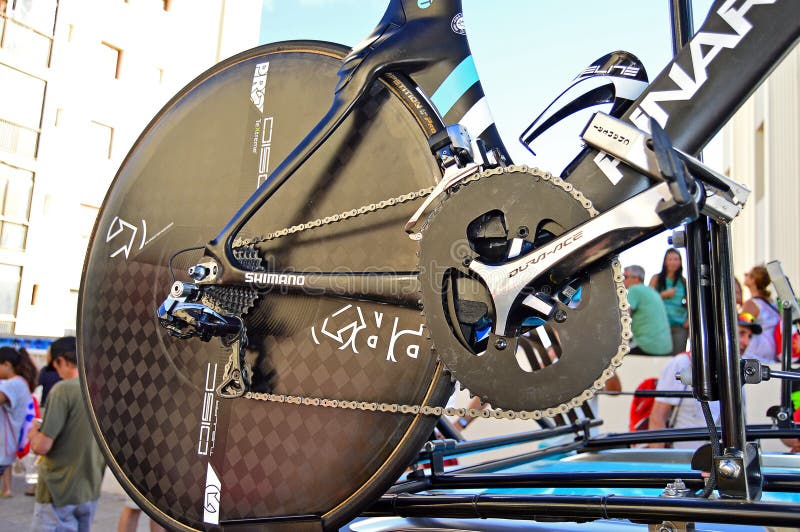 And particularly because he was into the super ovalized ones (seriously, how much farther until they are square folks?) Apparently actually square chain rings are a jewelry thing and not yet a cycling thing.
But it was important that Froome was always riding these crazy looking rings and winning big races. It may have just been a convenient way of hiding his actual power numbers when the public was so desperate to know.
But I, for one, have been convinced of the utility of the oval rings. Some people would say that my conclusions are irrelevant since I use a Stages power meter that isn't precise enough, but if Froomey is down with it, it has to validate my feelings a little bit. (Especially since Sky started using Stages!)
But if we've perhaps lost Chris as the most recognized believer in oval chainrings, have we now lost the fight? Only time will tell but I take a different lesson from it.
Don't take things too far in your pursuit of marginal gains. Oval chainrings work, they are great, I even like the aesthetics of them, but don't go too far. Those Osymetric things are just too much, the chain bounce and the squashed oval is just a bridge too far. 1000 ng/ml is ok Chris but when you are starting to approach 2000 ng/ml, you've crossed a line!
So go for the marginal gains, put these pretty rings on your road bike, enjoy the performance benefits and the pleasing look that is just odd enough to catch the eye but not enough to frighten anyone.
Just avoid going too far. It is fine to have asthma, lots of people do (lots even have legit asthma!). But if you are suffering from asthma so severe that you need injections of kenacort, you probably shouldn't be starting a grand tour soon. Get that stuff better and then start your grand tour!
Seriously Chris, say it ain't so. As much as I wanted you to lose, as much as I find myself unfairly despising Team Sky, I didn't really want it to go down this way. It is bad for the sport, I agree with Nibs on this one.
(On a more straight-forward note, it does seem really strange to blow it on salbutamol, which hasn't been shown to really increase performance so why go over the line there? Is it just a miscalculation in dosage that got messed up because he metabolized it differently, etc.? I know the science of the testing and the drug itself is super complex and so it isn't an open and shut case, he may have followed all the right instructions and still ended up with the adverse analytical finding. Labs can make mistakes. So I sort of hope this turns out to be nothing because otherwise Froome and Sky are just being dumb. Unless they have done other testing that has shown that salbutamol really does help.)
We know Salbutamol helps you perform better on the bike. If it weren't the case, why would Ulissi have been using so much of it? Why would guys from historically shady teams be getting caught over the limit? Why do so many riders in the World Tour seem to suffer from Asthma? Even Ale-jet seemed to have some trouble that required quite a lot of salbutamol to fix.
Why was Wiggins getting injections for asthma that were so conveniently timed? David Millar explained exactly why they all have asthma, it is so they can use salbutamol and other drugs like it.
And maybe, just maybe, amateurs are getting asthma too so they can take advantage of what is clearly a loophole (especially when there is more testing.)
But all of this is just noise, the real problem is the blow to what some of us know is a wonderful performance enhancer, legal, and not even filled with yak blood or turtle hormones!
They are those lovely ovalized chainrings, the rings that have been born and almost died many times living under labels like biopace, but now gaining wider acceptance with Rotor, Osymetric, and Absolute Black among the biggest producers of the rings for both road and mountain riding.
And Froome was clearly a big believer. Look at the size of those things:
But it was important that Froome was always riding these crazy looking rings and winning big races. It may have just been a convenient way of hiding his actual power numbers when the public was so desperate to know.
But I, for one, have been convinced of the utility of the oval rings. Some people would say that my conclusions are irrelevant since I use a Stages power meter that isn't precise enough, but if Froomey is down with it, it has to validate my feelings a little bit. (Especially since Sky started using Stages!)
But if we've perhaps lost Chris as the most recognized believer in oval chainrings, have we now lost the fight? Only time will tell but I take a different lesson from it.
Don't take things too far in your pursuit of marginal gains. Oval chainrings work, they are great, I even like the aesthetics of them, but don't go too far. Those Osymetric things are just too much, the chain bounce and the squashed oval is just a bridge too far. 1000 ng/ml is ok Chris but when you are starting to approach 2000 ng/ml, you've crossed a line!
So go for the marginal gains, put these pretty rings on your road bike, enjoy the performance benefits and the pleasing look that is just odd enough to catch the eye but not enough to frighten anyone.
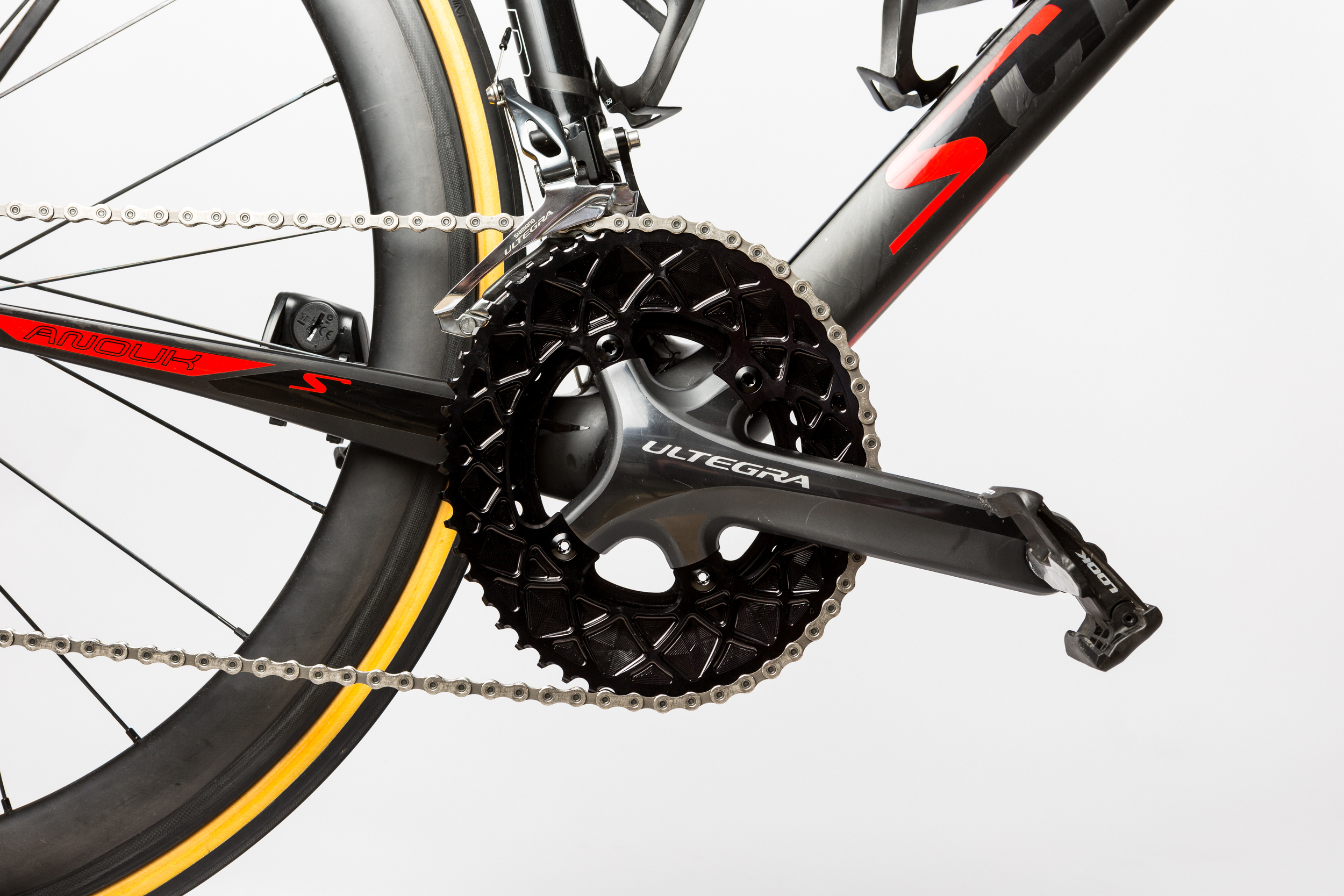 |
| Seriously, how good does that look! |
Seriously Chris, say it ain't so. As much as I wanted you to lose, as much as I find myself unfairly despising Team Sky, I didn't really want it to go down this way. It is bad for the sport, I agree with Nibs on this one.
(On a more straight-forward note, it does seem really strange to blow it on salbutamol, which hasn't been shown to really increase performance so why go over the line there? Is it just a miscalculation in dosage that got messed up because he metabolized it differently, etc.? I know the science of the testing and the drug itself is super complex and so it isn't an open and shut case, he may have followed all the right instructions and still ended up with the adverse analytical finding. Labs can make mistakes. So I sort of hope this turns out to be nothing because otherwise Froome and Sky are just being dumb. Unless they have done other testing that has shown that salbutamol really does help.)
Tuesday, December 12, 2017
On Wouters and Weirdness
I re-visited The Barkley Marathons documentary recently and was struck by Wouter Hamelinck's story at the race.
When I've shown the documentary in my class, students are always shocked by the fact that he rode his folding bike from the airport to the race. He may have taken a route similar to this one:
 And this seems so bizarre to the typical American high school student, and my guess is to the typical American.
But see, this isn't weird. Riding a bicycle to get places is not weird, it isn't crazy, it isn't just for insane people who have vendettas against cars, it isn't just for vegans.
Bicycles have always been fantastic at getting people around, they are efficient, can be modified to do all sorts of great things like carrying kids, cargo, even other bicycles.
Bizarre is the fact that Wouter wanted to run the Barkley, one of the most tortuous ultra-marathons in the world and famous for crushing even the most accomplished psychos who love this sort of thing like Gary Robbins.
In the US, slow progress is being made. The number of bike trips taken by Americans has steadily increased since the 1970s and exploded in some places in the US. Apparently in Portland, nearly 6% of all trips are taken by bicycle.
But that is seen as weird by the majority of Americans. But it isn't weird, the only reason we think that is because we've been trained to think that.
Elsewhere, the culture of cycling to get places is completely, absolutely, majestically the norm. It isn't just in Copenhagen where people think it is normal to ride bikes.
It is certainly true that US cities lack the infrastructure to make cycling as safe as it is in other countries where people don't feel the need to wear helmets because riding a bike is inherently pretty safe until cars are involved hitting the people riding bikes.
And helmet laws discourage riding, which, as Chris Boardman so eloquently pointed out, makes people significantly less healthy. Mandatory helmet laws are seen as being so important but have never been shown to decrease head injuries.
This too is simply a cultural problem, a culture that believes that cycling itself is dangerous and weird is incapable of seeing that it isn't cycling that is dangerous, it is the way that people operate motor vehicles that is dangerous to everyone around them and in them.
And this has all sorts of incredibly negative effects on public health. Boardman writes: “In the UK one in six deaths – nearly 90,000 per year – is as a result of physical inactivity related disease including diabetes, heart disease and cancer. Clearly, any measure proven beyond doubt to reduce people’s likelihood to travel by bike, will almost certainly kill more people than it saves.”
I rode my bike to work this morning, even at 6:15AM with roads that are relatively quiet, it can be scary. I have super bright headlights and tail-lights, reflective bits all over, and I don't have that far to go. But it can still be terrifying.
When I've shown the documentary in my class, students are always shocked by the fact that he rode his folding bike from the airport to the race. He may have taken a route similar to this one:

But see, this isn't weird. Riding a bicycle to get places is not weird, it isn't crazy, it isn't just for insane people who have vendettas against cars, it isn't just for vegans.
Bicycles have always been fantastic at getting people around, they are efficient, can be modified to do all sorts of great things like carrying kids, cargo, even other bicycles.
Bizarre is the fact that Wouter wanted to run the Barkley, one of the most tortuous ultra-marathons in the world and famous for crushing even the most accomplished psychos who love this sort of thing like Gary Robbins.
In the US, slow progress is being made. The number of bike trips taken by Americans has steadily increased since the 1970s and exploded in some places in the US. Apparently in Portland, nearly 6% of all trips are taken by bicycle.
But that is seen as weird by the majority of Americans. But it isn't weird, the only reason we think that is because we've been trained to think that.
Elsewhere, the culture of cycling to get places is completely, absolutely, majestically the norm. It isn't just in Copenhagen where people think it is normal to ride bikes.
It is certainly true that US cities lack the infrastructure to make cycling as safe as it is in other countries where people don't feel the need to wear helmets because riding a bike is inherently pretty safe until cars are involved hitting the people riding bikes.
And helmet laws discourage riding, which, as Chris Boardman so eloquently pointed out, makes people significantly less healthy. Mandatory helmet laws are seen as being so important but have never been shown to decrease head injuries.
This too is simply a cultural problem, a culture that believes that cycling itself is dangerous and weird is incapable of seeing that it isn't cycling that is dangerous, it is the way that people operate motor vehicles that is dangerous to everyone around them and in them.
And this has all sorts of incredibly negative effects on public health. Boardman writes: “In the UK one in six deaths – nearly 90,000 per year – is as a result of physical inactivity related disease including diabetes, heart disease and cancer. Clearly, any measure proven beyond doubt to reduce people’s likelihood to travel by bike, will almost certainly kill more people than it saves.”
But it is only terrifying because of drivers. Sometimes they are just ignorant about the rules regarding bikes in roads, sometimes (a lot of the time) they are just not paying attention, and sometimes they are belligerent and homicidal.
But the problem has nothing to do with me and my bike. But Americans can't see it that way because of the way they've been trained to view people on two wheels. Legally it is basically ok to hit and kill someone on a bike as long as you don't flee the scene and say you are sorry. Real cycling infrastructure always faces huge obstacles and takes decades to happen. Then as soon as it is in place for some time, most residents love it, even the people that don't ride bikes.
But the act of riding from the Knoxville airport to Frozen Head State Park to run the Barkley Marathons is not weird. It isn't unsafe, even though Wouter didn't wear a helmet.
Why would he? He knows cycling is safe because he grew up thinking that and has lived it.
Maybe someday America will realize it too.
PS - When I think of Wouters, I cannot help but think of Wouter Weylandt. Cycling can be dangerous sometimes, even for people who do it for a living. But those times are astonishingly few and far between even for the guys who take insane risks because they are racing down mountains in packs and in and out of cars, etc. RIP WW
Wednesday, December 06, 2017
A sweet new bike being sadly neglected
I got this in the mail a couple weeks ago:
 Not this exact frame mind you, but one that is an awful lot like it. Only subtract the nice ceramic bearings. And I find it a little bit sad that I am so busy that I actually haven't even stripped off the packing materials to properly gaze upon this beautiful new (to me) machine. Or started spending money I shouldn't on getting the bits necessary to build this up into the powerful steed it will become.
Pitiful, in a way, but also good to know that my priorities are not entirely demonstrably misplaced. At least not all the time!
And I was struck by another, significantly different observation today. Some of you are familiar with the "Charge of the Light Brigade" by Lord Tennyson. The most often quoted lines come from the second stanza:
Pitiful, in a way, but also good to know that my priorities are not entirely demonstrably misplaced. At least not all the time!
And I was struck by another, significantly different observation today. Some of you are familiar with the "Charge of the Light Brigade" by Lord Tennyson. The most often quoted lines come from the second stanza:
Was there a man dismayed?
Not though the soldier knew
Someone had blundered.
Theirs not to make reply,
Theirs not to reason why,
Theirs but to do and die.
Into the valley of Death
Rode the six hundred.
When one team leader quoted it to another team leader in a flashback sequence in Netflix's new Punisher series, Frank Castle (the other team leader) gives a reply that paints the poem in a new light for me:
"Ours is not to reason why, Frankie Boy, ours is but to do or die" mis-quotes the soldier.
Frank's reply: "That's from a poem about a bunch of guys got their asses handed to them on the back of bad intel, right?"
The idea of the rough and tumble Frank Castle having actually read a poem shocks his buddy.
But it is reminiscent of a few good portrayals of the more-complex-than-you-thought hero or anti-hero. Perhaps my favorite is still Omar in The Wire.
One of the sweetest scenes in the series:
That stuff is deep. Truly.
So is the explanation of "Charge of the Light Brigade" as "a poem about a bunch of guys got their asses handed to them on the back of bad intel."
Good work whoever wrote that episode!
Tuesday, December 15, 2015
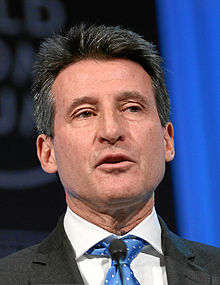
I just read this little tidbit from Sir Sebastian Coe and it got me thinking.
Track and field and cycling, two of my favorite sports, are also the sports where doping of some kind or another has been rampant since about the time they started. At least now the cyclists aren't taking cocaine, barbituates and rat poison to help them climb the mountains (and sometimes die). But you can bet they are still doing everything they can to win. And sometimes that will include taking performance enhancing drugs.
The nature of the two sports with records that can easily be compared across eras, much more easily than in sports like baseball or football that have changed so much and have vastly different equipment, etc. (though baseball fans will often claim that they have the same sort of feelings about records, hard to believe since they too are so frequently the result of some of the most obvious abuse of PEDs) creates fans of two kinds.
The "European" type who understand the fact that doping has always been and will always be a part of it and will look the other way as long as it isn't rubbed in their faces and the "American" type who want to believe in some kind of ideal sportsman thing where they don't take drugs and they don't cheat and records are sacred. Except in the midst of the excitement when the big sluggers are chasing the records and no one cares that their heads are several inches wider than they were and they are defying both age and physics.

That paragraph was originally much shorter but reading about Bonds and others and the physics of their changing bat speed while maintaining a highly efficient swing corresponding to drug use is fascinating stuff.
But when the largest cycling event in the country is sponsored by Amgen, one of the biggest pushers of artifical EPO, you really shouldn't get too carried away about purity. But we still do. There's rampant speculation about the most recent Tour de France winner crowned yesterday after the first evening finish on the Champs Elysee. Chris Froome claims that he is 100% clean and lots of us hope he isn't doing anything too crazy that will come out 10 years from now.
And therein lies the rub, so to speak. As Seb Coe noted, lots of damage has been done to "his" or "our" sport because of doping and any leniency about it only increases that damage.
I actually wasn't even interested in his rant about 4 year bans over 2 year ones, I was struck by his ownership of the sport. Because when we as fans (and even Seb Coe is now a fan, just like every other former athlete) own a sport, we own the spectacle of it, the desire to cheer for our favorite teams or players, the desire to endlessly argue about who will do what in which season and make all kinds of stupid predictions that will almost always be wrong. And along with that ownership comes a responsibility, at least in my mind.
If we want super-human performance, we'd better be willing to take a "European" attitude about it and perhaps even be willing to stop looking the other way when "our" former players are suffering from the effects of "our" sport.
I don't mean to suggest that it isn't actually our sport, it is our watching on TV and paying for merchandise and tickets and giving sponsors reason to be involved that supports these sports and gives these athletes very big stages to perform on. And as (at least part) owners of the sport I think we ought to be willing to accept the reality of it and acknowledge that the athletes will do anything and everything they can to win or to make it onto the biggest stage. This includes doping, cheating, and sometimes sending someone to go hit the other girl's knee with a metal baton.
I think I've just grown weary of the outrage on both sides. The folks that defended Lance Armstrong right up until his admission and the ones that still do. They are just as annoying as the ones who rage about how we must throw out all the cheaters and have zero tolerance and everything else.
You don't want guys in the NFL to get busted? Then be perfectly happy with their very lax and easy to beat testing regime.
You don't want baseball players to get outed as steroid users but you still want to see lots of homeruns and get your favorite players back out on the field quickly from the injuries that are bound to come with playing 162 games a season? Same as the NFL, just be glad no one is pushing for the same level of scrutiny that comes with being an Olympic athlete or a pro cyclist.
And for cycling fans, learn to overlook the fact that Lance was doping and maybe form your opinion based on how he treated his teammates, took advantage of his fans and his image as a cancer survivor, etc. If you are ok with that, then be happy that he dominated those 7 Tours de France and still has the yellow jerseys hanging in his house.

And maybe just enjoy watching arguably the most entertaining Tour de France in recent history where guys cracked and the peleton as a whole looked far less superhuman than it did 5 years ago. I don't believe that guys aren't micro-dosing or doing other things that can't get caught yet. If you had to drop back to the team car 150 kilometers into a 250 kilometer stage and bring 12 water bottles back through the group, and your livelihood depended on being able to do that, maybe it is ok to put a little testosterone gel someplace on your body to try and recover to be able to do the same thing the next day.
If the sport were exclusively the property of the athletes, they might push for a totally clean sport, make everyone normal, they'd probably get hurt less, hit softer, ride slower, and be out for injuries longer, but at least they wouldn't have to have three alarm clocks set to wake them up in the middle of the night because their massive and super strong hearts can't pump their sludgy blood (thanks to the EPO or whatever else) around and they'd die otherwise.
At some point we have to come to grips with the fact that it is us and our money as fans that may very well be the driving force behind the doping the steroid abuse, etc. And save your outrage for yourself. If it really bothers you so much, stop watching, stop talking about it, stop reading about it online and you've done the most you can to change anything.
Don't conflate athletes trying to win with child abusers or others who are hurting people. Can you make the argument that Lance stole from people and hurt them? Sure you can, but you didn't turn off the TV during his interview on Oprah did you?
Of course you are just one person and the sponsors and the managers and the athletes don't care if one person stops watching. But that is the only decision you can be responsible for and make, you don't make the decision to dope or not to. You don't make the decision to change the testing regime or not to. Your blanket acceptance by watching, cheering, paying (lets face it mostly paying) for the privilege to do those things is a blanket acceptance in real terms.
Saturday, January 26, 2013
A True Champion
Given the recent revelations from Lance Armstrong (or lack thereof depending on your perspective), we are again having to question our ideas of what makes a champion or what makes an athlete worthy of our adulation. In the spirit of Lance being the "champion" of a sport most Americans know little about but has a massive following in Europe, I'd put forward another little-known (in the US) champion who embodied many of the things we so enjoyed about Lance but managed to steer clear of the megalomania and urge to destroy others who stood up to him (off the bike) that Lance did.
 If you haven't watched Senna the documentary from Working Title Films, I must recommend very strongly that you do. It isn't overly long, it isn't overly sappy, but it will change the way you view racing and introduce you to at least several sides of an interesting man who was a great champion.
As someone who has driven a car, even one with a turbo and a manual transmission, I always felt I had some appreciation for race car drivers. This film helped to absolve me of that stupid assumption. The images from inside the cockpit as Ayrton wrestles a car described by the boys at "Top Gear" as more akin to a wild ferocious animal than the powerful but refined machines that F1 drivers today manage will awaken you to what it must have taken to do what he did.
And then it starts to rain. And suddenly he is even better, in fact his coming out party came at Monaco when driving a really crappy car (compared to other F1 cars) and the rain began and suddenly he was making up between 6-8 seconds on the leader every lap. Alain Prost, the reigning world champ, luckily convinced the officials to call the race just before Senna overtook him.
The hosts of Top Gear help to give more credence to the feeling I had watching the documentary that Senna was something very special. And in some ways coming to that realization long after the fact makes it even more valuable in my mind. Here is a man who was a hero to millions and millions of people and respected by drivers and F1 fans the world over and I'd never heard of him. Suddenly I have this opportunity to not only know something about the man but to appreciate this sport and some of its nuance by getting this glimpse into one of its greatest champions.
And his "champion" ness is confirmed by his ruthlessness as a driver, his willingness to place other drivers in position to either crash or give way, his attention to detail and precise approach, his unwillingness to accept anything less than being the best, all of these make him a champion. And strangely enough, or perhaps it seems strange now, I think Lance shared many of these traits. One of the reasons he was so fun to watch was that he was a ruthless competitor on the bike and he doped himself into a position to be ruthless but if anything is easy to forgive it is that, given its ubiquity at the time in the pro peleton.
But what Senna had that Lance lacked, what made him a true champion was the humility to forgive, the humility to understand his place even as he was worshipped by millions, the humility to care for those around him even as he was trying his very best to obliterate them in competition. In the documentary "Ayrton Senna - The Right to Win" one of his rivals describes the last moment he shared with him prior to his death and the way that Ayrton clearly showed that he could be happy for others when things went well for them. This is one of the things that makes a great champion and separates them from someone like Lance.
If you watched Lance's interview with Oprah, you may recall his discussion of doping to win the seven tours and his suggestion that he already knew he was going to win, he almost laughed about it, telling Oprah that they already knew they would win. He had doped, built a doped super team, done everything he could to be certain that his rivals could not win. And if you watched Ayrton crash into Alain Prost in the first half mile of the Grand Prix of Japan, you might say look, they are the same, they will do anything to win. Ayrton argued that he should have the outside lane, that it was the clean part of the track and since he won the pole he should take the outside. He didn't get it, and knowing that Prost not finishing would make him world champ, he made sure Prost didn't finish, simple as that.
The difference is that when Ayrton faced cars that were technically superior to his, he either couldn't or didn't use his influence or his power to either crush those teams or steal the technology or jump across into one of those cars. He fought to compete and lost with grace.
The difference is that Ayrton was not selected by the governing body of F1 to be the winner as Lance was selected by the UCI and Hein Verbruggen and Pat McQuaid to be immune to doping controls and to be informed of testers arrival, etc. Ayrton was victimized by Jean Marie Balestre who repeatedly took the side of Alain Prost even costing Ayrton a shot at the World Title in 1989 and stole one of the greatest victories in F1 history from him. (A lap or two here) Prost (arguably) crashed Senna out of the race but Senna pitted, got a new front wing, came back and re-took the lead in just the remaining 5 laps only to be disqualified by Belestre at the behest of Prost.
The day that Senna died at Imola, he remarked that morning that he missed Alain Prost, missed racing against him. Not because they were always best friends, not because they didn't do spectacularly dangerous things to each other to try and win.
Senna missed Prost because he liked having a great rival, someone who he could rejoice in beating when they both were at their best. Someone who had beaten him, someone who gave Senna's dominance a definite lack of certainty, someone who gave him doubts about his own greatness.
Lance can't handle doubts about his greatness, even as he admits cheating his way to it.
PS - How a race car driver drives a regular car (watch his feet)
PPS - The book about Ayrton by Christopher Hilton, Ayrton Senna: The Whole Story has been great so far. I am just about 1/4 of the way through after getting it in the mail today. So far it would suggest that he is even more of a champ than I thought!

As someone who has driven a car, even one with a turbo and a manual transmission, I always felt I had some appreciation for race car drivers. This film helped to absolve me of that stupid assumption. The images from inside the cockpit as Ayrton wrestles a car described by the boys at "Top Gear" as more akin to a wild ferocious animal than the powerful but refined machines that F1 drivers today manage will awaken you to what it must have taken to do what he did.
And then it starts to rain. And suddenly he is even better, in fact his coming out party came at Monaco when driving a really crappy car (compared to other F1 cars) and the rain began and suddenly he was making up between 6-8 seconds on the leader every lap. Alain Prost, the reigning world champ, luckily convinced the officials to call the race just before Senna overtook him.
The hosts of Top Gear help to give more credence to the feeling I had watching the documentary that Senna was something very special. And in some ways coming to that realization long after the fact makes it even more valuable in my mind. Here is a man who was a hero to millions and millions of people and respected by drivers and F1 fans the world over and I'd never heard of him. Suddenly I have this opportunity to not only know something about the man but to appreciate this sport and some of its nuance by getting this glimpse into one of its greatest champions.
And his "champion" ness is confirmed by his ruthlessness as a driver, his willingness to place other drivers in position to either crash or give way, his attention to detail and precise approach, his unwillingness to accept anything less than being the best, all of these make him a champion. And strangely enough, or perhaps it seems strange now, I think Lance shared many of these traits. One of the reasons he was so fun to watch was that he was a ruthless competitor on the bike and he doped himself into a position to be ruthless but if anything is easy to forgive it is that, given its ubiquity at the time in the pro peleton.
But what Senna had that Lance lacked, what made him a true champion was the humility to forgive, the humility to understand his place even as he was worshipped by millions, the humility to care for those around him even as he was trying his very best to obliterate them in competition. In the documentary "Ayrton Senna - The Right to Win" one of his rivals describes the last moment he shared with him prior to his death and the way that Ayrton clearly showed that he could be happy for others when things went well for them. This is one of the things that makes a great champion and separates them from someone like Lance.
If you watched Lance's interview with Oprah, you may recall his discussion of doping to win the seven tours and his suggestion that he already knew he was going to win, he almost laughed about it, telling Oprah that they already knew they would win. He had doped, built a doped super team, done everything he could to be certain that his rivals could not win. And if you watched Ayrton crash into Alain Prost in the first half mile of the Grand Prix of Japan, you might say look, they are the same, they will do anything to win. Ayrton argued that he should have the outside lane, that it was the clean part of the track and since he won the pole he should take the outside. He didn't get it, and knowing that Prost not finishing would make him world champ, he made sure Prost didn't finish, simple as that.
The difference is that when Ayrton faced cars that were technically superior to his, he either couldn't or didn't use his influence or his power to either crush those teams or steal the technology or jump across into one of those cars. He fought to compete and lost with grace.
The difference is that Ayrton was not selected by the governing body of F1 to be the winner as Lance was selected by the UCI and Hein Verbruggen and Pat McQuaid to be immune to doping controls and to be informed of testers arrival, etc. Ayrton was victimized by Jean Marie Balestre who repeatedly took the side of Alain Prost even costing Ayrton a shot at the World Title in 1989 and stole one of the greatest victories in F1 history from him. (A lap or two here) Prost (arguably) crashed Senna out of the race but Senna pitted, got a new front wing, came back and re-took the lead in just the remaining 5 laps only to be disqualified by Belestre at the behest of Prost.
The day that Senna died at Imola, he remarked that morning that he missed Alain Prost, missed racing against him. Not because they were always best friends, not because they didn't do spectacularly dangerous things to each other to try and win.
Senna missed Prost because he liked having a great rival, someone who he could rejoice in beating when they both were at their best. Someone who had beaten him, someone who gave Senna's dominance a definite lack of certainty, someone who gave him doubts about his own greatness.
Lance can't handle doubts about his greatness, even as he admits cheating his way to it.
PS - How a race car driver drives a regular car (watch his feet)
PPS - The book about Ayrton by Christopher Hilton, Ayrton Senna: The Whole Story has been great so far. I am just about 1/4 of the way through after getting it in the mail today. So far it would suggest that he is even more of a champ than I thought!
Tuesday, January 22, 2013
Interview on Bob Long Sports Radio
Got on Bob Long Sports for their weekly show last night. Talked about Lance and the reactions to his interview.
Friday, January 18, 2013
Same old Lance
Lance Armstrong pretended to tell the truth for the past 15 years about his cycling accomplishments, the doping he didn't practice, the things that other people said that he did, about who he was as a person. And then he went on Oprah last night to tell the truth, the real truth. And he continued to pretend.
But don't get caught in the "level playing field argument."
Don't for a minute think that Lance himself is anything but a cheater, a liar, a bully, and isn't repentant about a single one of those things.
It is telling that those who know him, those who were his friends are the most vocal about how little his interview on Oprah has changed things or perhaps made it worse.
Read Rick Reilly's column and be aware that he played people who then went to bat for him over and over and over again. Everything he did, the number of tests he claimed to have passed, everything was a lie and he was incredibly adept at making people believe them.
Read Betsy Andreu's interview with Austin Murphy prior to the Oprah show and after Lance called her to begin apologizing. Then watch her interview with Anderson Cooper on CNN last night post Oprah. She is furious, and rightly so about the lack of contrition, the unwillingness to answer arguably the most important question for her about whether he told doctors that he doped prior to his cancer diagnosis. She is hurt by his boorish comment about not calling her fat and points out that he gives little reason to trust him now. Perhaps even more importantly, she points out in her interview this morning on ABC that he can't admit that the hospital room conversation happened because it would open up more legal issues.
Read Greg Lemond's comments on cyclingnews.com and elsewhere. He argues that it is possible to win the Tour without doping. He points out that Lance never apologized to the people he destroyed, the people like Lemond. He also points out that Lance's story included the whole idea of his incredible talent, all the myths about his body not producing lactic acid, etc. Lemond suggests that “If Armstrong had given Floyd Landis and Tyler Hamilton the same stuff he was taking, he would never have won – they would have beaten him.”
Remember that he made it very clear that all doping ceased after 2005. He had to make this point to keep him safe using the statute of limitations. If he admits doping in 2009 and 2010 he is wide open for perjury charges and likely jail time. If he admits that, and his blood values from those tours suggest very strongly that he did, he stands to lose even more money. The prospect of him being bled dry has become very real with the Landis whistleblower suit along with SCA trying to get their money back, the Sunday Times going after theirs and the possibility of other civil suits that could be filed depending on what he admits to.
Lance said last night that he "wanted to control the narrative," that he always wanted to be sure that the story fit with his version. And nothing, absolutely nothing has changed. He is attempting to use Oprah and this two-part "confession" to clear the way for him returning to competition earlier than he hoped while still keeping him free of the legal troubles that a real admission would bring. He is still covering for his friends McQuaid, Verbruggen, Ferrari and Bruyneel. He is trying to make it clear that he never was the ringleader of doping at US Postal because that might protect him in Landis' lawsuit.
The bottom line? Lance hasn't changed at all. He isn't contrite any more than he thinks he needs to be. He isn't admitting any more than he thinks he can get away with. He isn't answering the toughest questions thoroughly and none of it is under oath. He is protecting the figures that sullied the sport for years. He admits that he was treated differently because he won so many races and had so much money but then continuously makes the "level playing field" argument, one that is disproved by his own admission as well as the different physiological reactions to doping and different systems and levels of doping.
Lance is still a bully and a jerk and a liar. The only difference is that perhaps now without all the glitz and the money and the foundation and everything else, more people will see through his charade. And there's still a possibility that someday he will drop it and come clean. But I doubt it.
But don't get caught in the "level playing field argument."
Don't for a minute think that Lance himself is anything but a cheater, a liar, a bully, and isn't repentant about a single one of those things.
It is telling that those who know him, those who were his friends are the most vocal about how little his interview on Oprah has changed things or perhaps made it worse.
Read Rick Reilly's column and be aware that he played people who then went to bat for him over and over and over again. Everything he did, the number of tests he claimed to have passed, everything was a lie and he was incredibly adept at making people believe them.
Read Betsy Andreu's interview with Austin Murphy prior to the Oprah show and after Lance called her to begin apologizing. Then watch her interview with Anderson Cooper on CNN last night post Oprah. She is furious, and rightly so about the lack of contrition, the unwillingness to answer arguably the most important question for her about whether he told doctors that he doped prior to his cancer diagnosis. She is hurt by his boorish comment about not calling her fat and points out that he gives little reason to trust him now. Perhaps even more importantly, she points out in her interview this morning on ABC that he can't admit that the hospital room conversation happened because it would open up more legal issues.
Read Greg Lemond's comments on cyclingnews.com and elsewhere. He argues that it is possible to win the Tour without doping. He points out that Lance never apologized to the people he destroyed, the people like Lemond. He also points out that Lance's story included the whole idea of his incredible talent, all the myths about his body not producing lactic acid, etc. Lemond suggests that “If Armstrong had given Floyd Landis and Tyler Hamilton the same stuff he was taking, he would never have won – they would have beaten him.”
Remember that he made it very clear that all doping ceased after 2005. He had to make this point to keep him safe using the statute of limitations. If he admits doping in 2009 and 2010 he is wide open for perjury charges and likely jail time. If he admits that, and his blood values from those tours suggest very strongly that he did, he stands to lose even more money. The prospect of him being bled dry has become very real with the Landis whistleblower suit along with SCA trying to get their money back, the Sunday Times going after theirs and the possibility of other civil suits that could be filed depending on what he admits to.
Lance said last night that he "wanted to control the narrative," that he always wanted to be sure that the story fit with his version. And nothing, absolutely nothing has changed. He is attempting to use Oprah and this two-part "confession" to clear the way for him returning to competition earlier than he hoped while still keeping him free of the legal troubles that a real admission would bring. He is still covering for his friends McQuaid, Verbruggen, Ferrari and Bruyneel. He is trying to make it clear that he never was the ringleader of doping at US Postal because that might protect him in Landis' lawsuit.
The bottom line? Lance hasn't changed at all. He isn't contrite any more than he thinks he needs to be. He isn't admitting any more than he thinks he can get away with. He isn't answering the toughest questions thoroughly and none of it is under oath. He is protecting the figures that sullied the sport for years. He admits that he was treated differently because he won so many races and had so much money but then continuously makes the "level playing field" argument, one that is disproved by his own admission as well as the different physiological reactions to doping and different systems and levels of doping.
Lance is still a bully and a jerk and a liar. The only difference is that perhaps now without all the glitz and the money and the foundation and everything else, more people will see through his charade. And there's still a possibility that someday he will drop it and come clean. But I doubt it.
Thursday, January 17, 2013
Watch out, its the tyranny police
I just read something on facebook that got my attention. The premise was that the second amendment is about allowing people to wield power as individuals within a collective. That just as individuals voting responsibly keeps the collective healthy, individuals wielding firearms (whether as a peace-keeping citizen or a member of the military) responsibly helps maintain a proper balance of power within the collective.
In his article, Kevin Yuill at least points out the fact that most people tend to ignore which is that there are quite a few powerful people who really would like to repeal or change the 2nd amendment but of course they realize this is impossible given that the majority of Americans would not support it. Because of this impossibility, the drive is for gun control whether through Congressional measures or by executive order or both. But Yuill's argument is that the 2nd amendment is not about who can or can't bear arms but is aimed at preventing the "tyranny of the seizure of weapons."
In a literal sense, he is correct. The amendment states that "the right of the people to keep and bear arms shall not be infringed." And if the state or federal government decided that they should take guns away from people or tried to prevent certain people from having them, that would be a tyrannical action.
But what about the tyranny of gun owners and wielders that is carried out against Americans every day? Anyone taking someone else's life with a gun is certainly practicing tyranny. I think it is fair to extend that to the idea that simply living in a country with so many guns means that I or my family are more likely to be killed by someone with a gun than in many other civilized countries. I think Yuill and others that use the tyranny argument want to make it clear that only a government or group of lawmakers or even an individual like the president are being tyrannical in suggesting controls on who can own guns.
But he's wrong. There's plenty of tyranny to go around.
If you as an individual decide that you want to have fewer restrictions on who can have what kinds of guns and where they can carry them, you are in favor of a tyranny that is visited upon those who would like to go to the park or into a school under the assumption that no one is carrying firearms.
Of course "bad people" or "sick people" may break those rules and you can argue that the tyranny of the sick or bad can only be stopped by the tyranny of the responsible gun owner. You can argue that the rules shouldn't be decided by the tyranny of the ignorant who don't know the difference between an AR-15 or an H&K-5 or even a .40 S&W.
But I'd appreciate it if we could stop pretending that tyranny is something only the government can wield. When you walk around carrying a gun and most other people around you don't have one, you are capable of more tyranny than many of those people put together. When you have a gun in your home, particularly if it isn't locked up and stored securely, you can even be a victim to the tyranny of the accidental or the stupid.
So while we are standing up for our rights and protesting against tyranny, real or just possible, I just want to make sure there is a space for me to do the same.
(And I am super curious how many guns I'd have to mention and link to within a blog post to make an adsense thing pop up advertising a gun store or particular weapon. Apparently this wasn't enough, maybe next time!)
In his article, Kevin Yuill at least points out the fact that most people tend to ignore which is that there are quite a few powerful people who really would like to repeal or change the 2nd amendment but of course they realize this is impossible given that the majority of Americans would not support it. Because of this impossibility, the drive is for gun control whether through Congressional measures or by executive order or both. But Yuill's argument is that the 2nd amendment is not about who can or can't bear arms but is aimed at preventing the "tyranny of the seizure of weapons."
In a literal sense, he is correct. The amendment states that "the right of the people to keep and bear arms shall not be infringed." And if the state or federal government decided that they should take guns away from people or tried to prevent certain people from having them, that would be a tyrannical action.
But what about the tyranny of gun owners and wielders that is carried out against Americans every day? Anyone taking someone else's life with a gun is certainly practicing tyranny. I think it is fair to extend that to the idea that simply living in a country with so many guns means that I or my family are more likely to be killed by someone with a gun than in many other civilized countries. I think Yuill and others that use the tyranny argument want to make it clear that only a government or group of lawmakers or even an individual like the president are being tyrannical in suggesting controls on who can own guns.
But he's wrong. There's plenty of tyranny to go around.
If you as an individual decide that you want to have fewer restrictions on who can have what kinds of guns and where they can carry them, you are in favor of a tyranny that is visited upon those who would like to go to the park or into a school under the assumption that no one is carrying firearms.
Of course "bad people" or "sick people" may break those rules and you can argue that the tyranny of the sick or bad can only be stopped by the tyranny of the responsible gun owner. You can argue that the rules shouldn't be decided by the tyranny of the ignorant who don't know the difference between an AR-15 or an H&K-5 or even a .40 S&W.
But I'd appreciate it if we could stop pretending that tyranny is something only the government can wield. When you walk around carrying a gun and most other people around you don't have one, you are capable of more tyranny than many of those people put together. When you have a gun in your home, particularly if it isn't locked up and stored securely, you can even be a victim to the tyranny of the accidental or the stupid.
So while we are standing up for our rights and protesting against tyranny, real or just possible, I just want to make sure there is a space for me to do the same.
(And I am super curious how many guns I'd have to mention and link to within a blog post to make an adsense thing pop up advertising a gun store or particular weapon. Apparently this wasn't enough, maybe next time!)
Subscribe to:
Posts (Atom)